
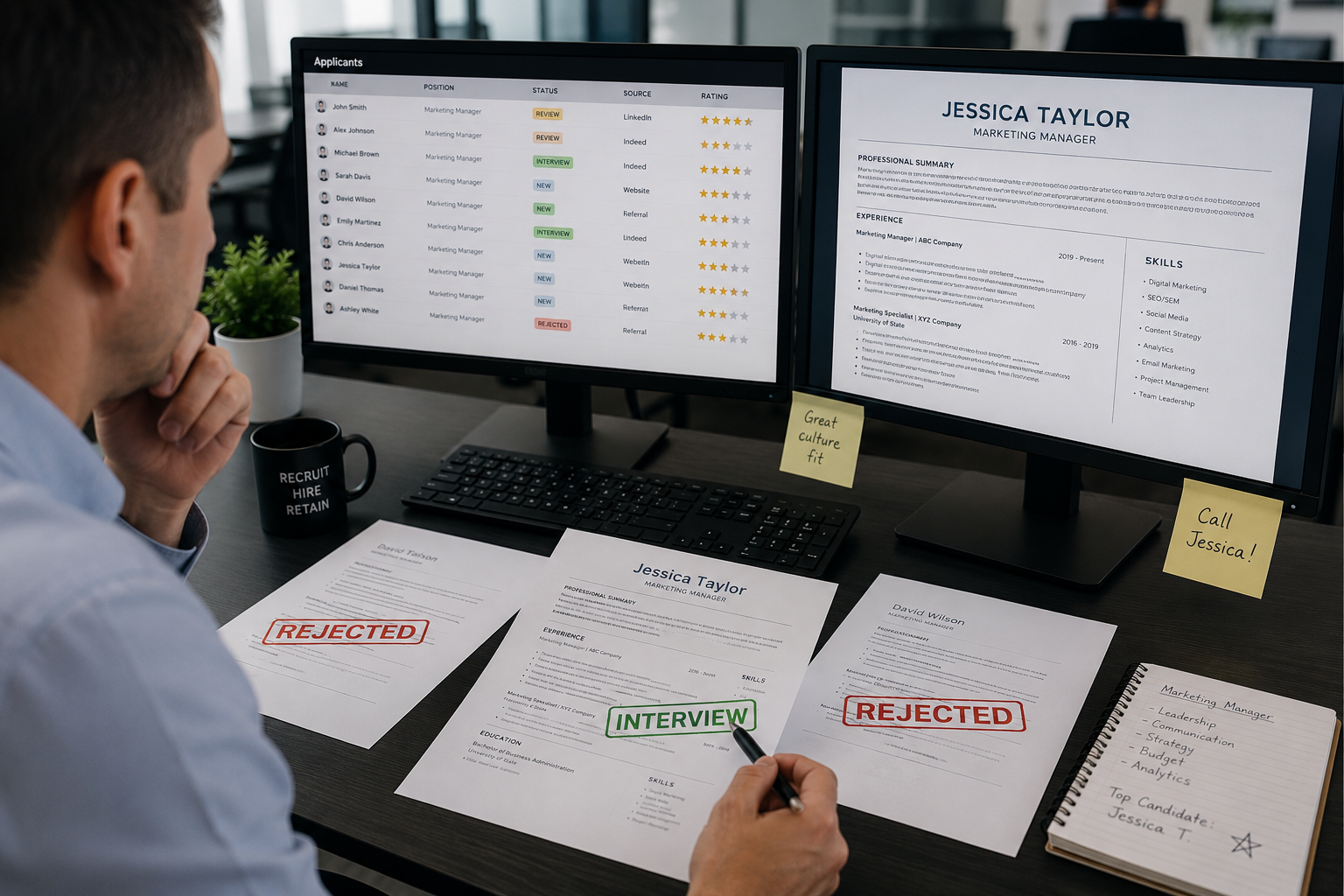
There was one moment that repeated itself throughout my recruiting career.
I'd open a new job posting in the morning. Within hours, my inbox would be flooded. Fifty applicants. One hundred applicants. Sometimes several hundred.
By the end of the day, there were more resumes than any recruiter could realistically read in depth.
And yet something surprising happened over and over again. Many of the people who looked qualified on paper never made it to an interview. Not because they weren't capable. Not because they lacked experience. Not because someone else was dramatically better.
They simply failed to communicate their value clearly enough, quickly enough.
After spending more than a decade in recruiting, staffing, and talent acquisition, I noticed the same patterns repeated across industries, companies, and job levels. Whether I was hiring healthcare professionals, office administrators, recruiters, managers, engineers, customer service representatives, or executives, the resumes that consistently earned interviews shared similar qualities. The resumes that didn't? They made many of the same avoidable mistakes.
If you're applying to jobs and hearing nothing back, I want to share what I learned from sitting on the other side of the hiring process. Because understanding how recruiters think can completely change how you approach your job search.
Recruiter's Tip
Wondering how your resume compares?
Before you apply to your next role, see exactly how your resume looks through a recruiter's eyes.
Why Great Candidates Never Get Interviews
One of the biggest misconceptions job seekers have is believing that recruiters carefully study every resume they receive. I wish that were true.
The reality is much different. Recruiters are balancing dozens of open positions, coordinating with hiring managers, scheduling interviews, answering candidate questions, negotiating offers, and managing hundreds of applications. Time is limited. Every resume is competing for attention.
That doesn't mean recruiters are looking for reasons to reject people. It means they're looking for reasons to move someone forward. That's a very different mindset.
When I reviewed resumes, I wasn't asking: "Is this person perfect?" I was asking: "Based on what I see right now, should I spend more time learning about this candidate?"
Your resume isn't trying to tell your entire life story. Its job is to earn the next conversation.
What Recruiters Actually Look For
People often ask how long recruiters spend reviewing resumes. There isn't a universal answer. Sometimes it's longer. Sometimes it's much shorter. But one thing is consistent: the first impression happens quickly.
Within those opening moments, recruiters begin looking for signals:
- Can I immediately understand what this person does?
- Is their experience relevant?
- Have they demonstrated results?
- Can I picture them succeeding in this role?
If those answers aren't becoming clear early in the resume, the chances of moving forward decrease. That's why clarity beats creativity almost every time.
The Biggest Resume Mistakes
Mistake #1: Describing Responsibilities Instead of Results
Candidates described responsibilities. Top candidates described results. Here's the difference:
Average
"Responsible for managing recruiting efforts."
Better
"Recruited and placed more than 150 healthcare professionals annually while reducing average time-to-fill by 24%."
One explains a job. The other demonstrates value. Hiring managers don't simply want someone who has performed tasks. They want evidence that those tasks produced meaningful outcomes.
Mistake #2: Not Using Numbers to Build Credibility
Instead of writing about what you were supposed to do, show impact. Ask yourself:
- What improved because I was there?
- What problems did I solve?
- What did I build, save, increase, or reduce?
Numbers help recruiters understand scale. Even approximate metrics provide valuable context when exact figures aren't available.
Before
"Managed a sales team."
After
"Led a team of 12 sales representatives that exceeded annual revenue targets by 18%."
Mistake #3: Sending the Same Resume to Every Job
Candidates would submit the exact same resume to dozens—or even hundreds—of jobs. While it might save time, it often reduces the resume's relevance to each position.
Every job description emphasizes different skills, technologies, responsibilities, and priorities. Taking the time to tailor your resume to the specific role helps both recruiters and Applicant Tracking Systems understand why you're a strong match.
Recruiter's Tip
See It Yourself
Upload your resume and compare it against any job description in under 60 seconds.
How ATS Works
Applicant Tracking Systems (ATS) are often misunderstood. Many people imagine them as robots that randomly reject resumes. In reality, ATS platforms primarily help employers organize applications, search for candidates, and identify resumes that align with the needs of a particular role.
That means your resume should clearly communicate your experience using language that reflects the position you're applying for. The goal isn't to "beat" the ATS. The goal is to make your qualifications easier to understand.
Missing ATS keywords? Run a Keyword Gap Analysis to discover exactly which terms you're missing from any job description.
Your Resume Should Answer Four Questions
Every recruiter is trying to answer a few essential questions:
- Can this person do the job?
- Have they solved similar problems before?
- Will the hiring manager immediately understand their experience?
- Should I spend more time with this candidate?
If your resume answers those questions quickly, you're already ahead of many applicants.
What Top Candidates Do Differently
Over time, the strongest resumes had several things in common. They were:
- ✓ Easy to scan
- ✓ Well organized
- ✓ Focused on accomplishments
- ✓ Tailored to the position
- ✓ Supported by measurable results
- ✓ Free of unnecessary buzzwords
- ✓ Honest about experience
- ✓ Written with the reader in mind
Interestingly, none of those qualities require expensive software. They require thoughtful communication.
Want a stronger resume? Use the Resume Optimizer to improve your accomplishment statements and strengthen your language.
How AI Can Help
One of the biggest changes I've seen is the emergence of AI tools that help candidates evaluate their resumes before applying. Instead of wondering why an application didn't receive a response, job seekers can now identify opportunities to improve before submitting.
AI can help compare your resume against a job description, identify missing skills, highlight keyword gaps, improve readability, and strengthen accomplishment statements. When used thoughtfully, it becomes another layer of feedback—not a replacement for your own experience.
Preparing for interviews? Try Interview Prep to practice questions generated from your resume and the specific job you're targeting.
How Career Spy Helps
After years of helping companies find talent, I wanted to build something that helped candidates better understand the hiring process from the recruiter's perspective. That's why I created Career Spy.
Career Spy isn't designed to write generic resumes. It's designed to help you understand how your resume aligns with the job you're pursuing. With Career Spy, you can:
- Resume Analyzer — Compare your resume against a job description
- Match Analysis — See how well your experience aligns with the role
- Keyword Gap Analysis — Discover missing ATS keywords
- Resume Rewriter — Strengthen your accomplishments and language
- Interview Prep — Prepare for interviews with AI-powered insights
- Resume Manager — Save every version of your resume
- Profile Setup — Build your complete career profile
- Pricing — Upgrade for unlimited analyses
My Advice to Every Job Seeker
If you've been applying for jobs without hearing back, don't assume you're unqualified. Instead, ask a different question:
"Is my resume making it easy for someone to understand why I'm a strong fit?"
Sometimes the difference between silence and an interview isn't another certification or another year of experience. It's communicating your existing experience more effectively.
Take the time to tailor your resume. Highlight measurable accomplishments. Use clear language. Show your impact. And remember that your resume doesn't have to tell your entire career story—it only needs to convince someone that you're worth talking to.
Before You Apply Again
Ready to See Your Resume Through a Recruiter's Eyes?
Before sending another application, take a few minutes to evaluate your resume the same way many recruiters do. Your next interview could start with a better resume.
Frequently Asked Questions
Why am I qualified but not getting interviews?
Most qualified candidates miss interviews because their resume doesn't clearly communicate their value. Recruiters spend limited time on each resume, so if your experience isn't immediately obvious and results-focused, you may be overlooked despite being fully qualified. Tailoring your resume to each job and highlighting measurable accomplishments dramatically improves your chances.
How long do recruiters spend reviewing resumes?
There is no universal answer, but the first impression happens very quickly—often within the first 30 seconds. Recruiters are managing dozens of open positions and hundreds of applications simultaneously, so clarity and relevance in the opening sections of your resume are critical.
Can ATS reject my resume?
ATS systems don't randomly reject resumes—they help employers organize and search applications. However, if your resume lacks the keywords and language from the job description, it may rank lower in searches. Using relevant keywords and a clean format improves your ATS performance.
Should every resume be customized for each job?
Yes. Every job description emphasizes different skills, technologies, and priorities. Tailoring your resume to each specific role helps both recruiters and ATS systems understand why you're a strong match. Even small adjustments can significantly improve your results.
What resume format is ATS friendly?
A clean, single-column format with standard section headings (Experience, Education, Skills) works best for ATS. Avoid tables, graphics, headers/footers, and unusual fonts. Use standard job titles and include keywords from the job description naturally throughout your experience section.
How do recruiters rank candidates?
Recruiters look for candidates who clearly demonstrate relevant experience, measurable results, and alignment with the specific role. Resumes that are easy to scan, focused on accomplishments rather than responsibilities, and tailored to the position consistently rank higher.
What keywords should I use on my resume?
Use keywords directly from the job description you're applying to. Focus on skills, tools, technologies, and job titles mentioned in the posting. Career Spy's Keyword Gap Analysis can automatically identify which keywords from a job description are missing from your resume.
Does Career Spy check ATS compatibility?
Yes. Career Spy analyzes your resume for ATS compatibility, identifies missing keywords, compares your resume against specific job descriptions, and provides actionable recommendations to improve your chances of passing automated screening and reaching a human recruiter.